
It's not only important but also required to manage an effective supply chain in today's fast-paced and competitive manufacturing world. Manufacturers have to manage a lot of different processes at the same time, from getting raw materials to getting the finished product to customers. This chain is prone to problems and inefficiencies that can raise costs, slow things down, and hurt customer trust.
Supply chain management in erp is a game changer. ERP helps manufacturers streamline their operations, boost performance, and get real-time information by bringing all of the supply chain processes together in one place. ERP solutions help companies deal with changes in the market, make the most of their resources, and stay ahead of the competition.
Enterprise Resource Planning is what ERP stands for. Enterprise resource planning (ERP) is a piece of software that brings together different business tasks into one system. These include managing finances, human resources, purchasing, production, sales, and inventory.
Modern ERP systems get rid of a lot of separate spreadsheets and tools by giving all departments access to a central database. This makes sure that operations are consistent, accurate, and open.
ERP software is important for manufacturing companies. It helps them keep track of complicated workflows and make sure that all departments are working together. Real-time data lets businesses keep an eye on performance, see how resources are being used, and make smart choices quickly.
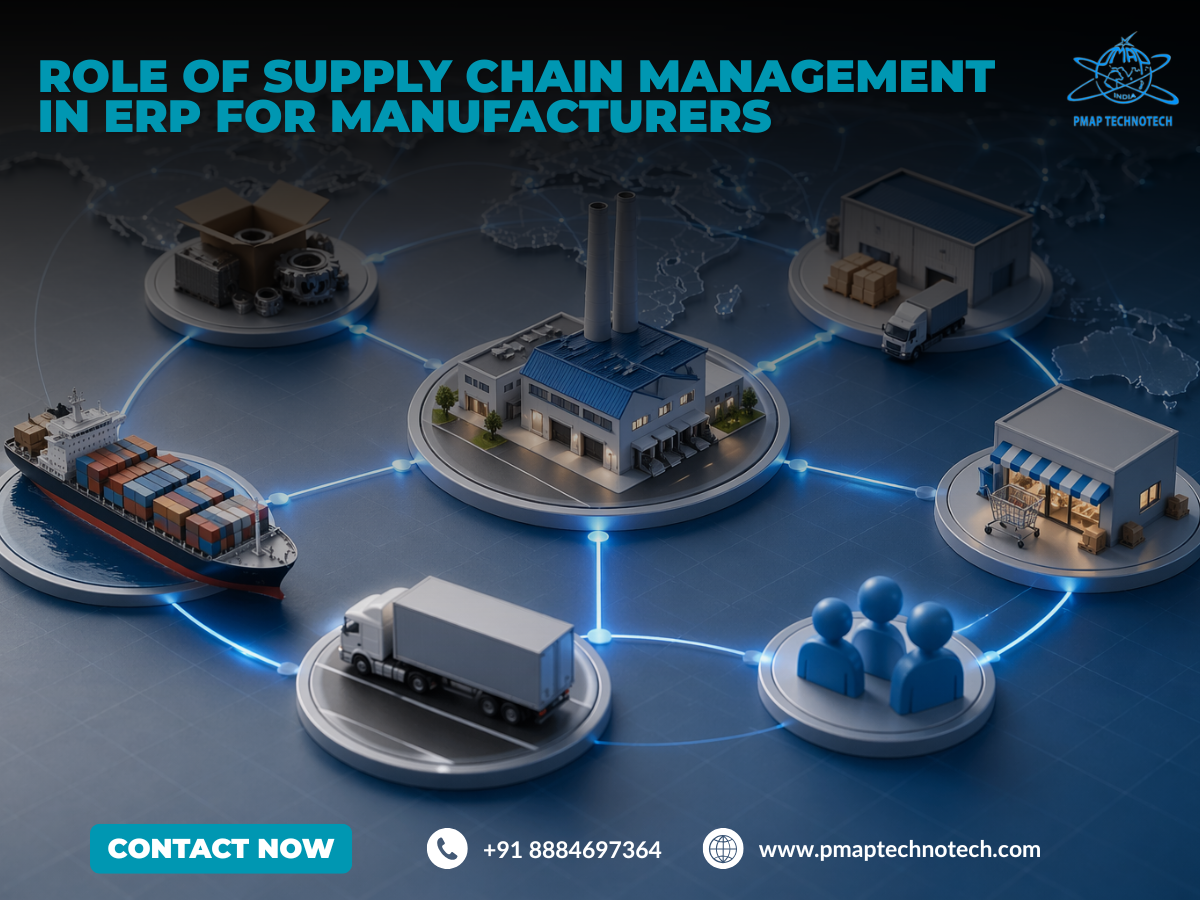
Supply chain management (SCM) is the planning and organization of all the tasks that go into making things. This covers everything from getting the raw materials to the client to delivering the finished product.
The key supply chain processes include:
Manufacturers need to have an efficient supply chain because it affects production schedules, product quality, and customer satisfaction directly. A well-managed supply chain makes sure that the materials needed are always on hand, production goes smoothly, and deliveries are on time.
The job of ERP in the supply chain is to bring everything together on one platform. Instead of working in silos, departments like production, logistics, and inventory can work together without any problems.
ERP and supply-chain integration give manufacturers a complete view of how their businesses work. They can keep an eye on their stock, handle orders, vendors, and performance in real time.
One of the best things about ERP is that it gives you real-time data. This gives businesses:
ERP allows for smoother workflows, and more informed decisions.
ERP systems have a lot of features that make it easier to manage the supply chain. The most important ones are:
ERP has advanced inventory management tools that let businesses keep track of multiple warehouses and keep their inventories at the right levels. This lowers the chance of running out of stock or having too much of it.
Using past data and analytics, ERP systems can guess what future demand will be. It helps manufacturers plan their production better and avoid problems.
ERP takes care of buying things, keeps track of suppliers' information, and keeps track of purchases. It makes the relationship with suppliers better and makes sure that raw materials are delivered on time.
ERP makes it easy to manage orders from the time they are placed until they are delivered. Businesses can keep an eye on the status of their orders in real time to make sure they are finished on time.
Companies use ERP systems to plan, schedule, and keep an eye on their production processes. This makes sure that the most work is done with the least amount of waste.
Using ERP has many benefits that make supply chain management in erp much more efficient:
ERP speeds up and makes operations more accurate by automating tasks that would otherwise be done by hand.
ERP helps cut costs and boost profits by making the best use of resources and cutting down on mistakes.
ERP makes sure that raw materials are planned and used correctly, which cuts down on waste and makes production more efficient.
A centralized system gives you a full view of every part of the supply chain, making it easier to keep an eye on and control things.
Businesses can make quick and smart decisions when they have access to real-time data. This cuts down on delays and makes them more responsive.
When supply chain operations are efficient, deliveries are on time and product quality is better, which builds customer trust and loyalty.
ERP is a big help for businesses that want to improve their supply chain management in erp by solving common problems and making things run more smoothly.
ERP automates tasks like tracking inventory, processing orders, and making reports, which means you don't have to do them by hand as much.
All of a company's data is kept in one place, which makes sure that all departments have the same information and that it is correct.
ERP makes it easier for different teams to talk to and work with each other, which makes workflows run more smoothly.
Businesses can see what's going on in their supply chains in real time, find problems quickly, and fix them.
ERP systems can grow with a business, so they work for both small and large companies.
There are a number of ERP systems that are made just for manufacturing companies. These solutions have features that are specific to each industry that help run production, inventory, and supply chain operations smoothly.
Manufacturers should think about the following when choosing the best ERP system:
Picking the right enterprise resource planning (ERP) software can make your business run more smoothly and help it grow.
Manufacturers that don't use ERP systems often run into problems that slow down their growth and make them less efficient:
Not having good chain management and ERP integration can cause problems that hurt the overall performance of a business.
Picture a medium-sized manufacturing business that had trouble with stock shortages and late deliveries because of bad management. The business depended a lot on manual work, systems that didn't talk to each other, and wrong information.
After putting in an ERP, the company could see how its supply chain and inventory were working in real time. The processes for buying things were automated. Planning for production got better. Tracking orders became easier. The business was able to cut costs, speed up delivery times, and make customers happier.
This example shows how ERP can completely change how supply chain management in erp works.
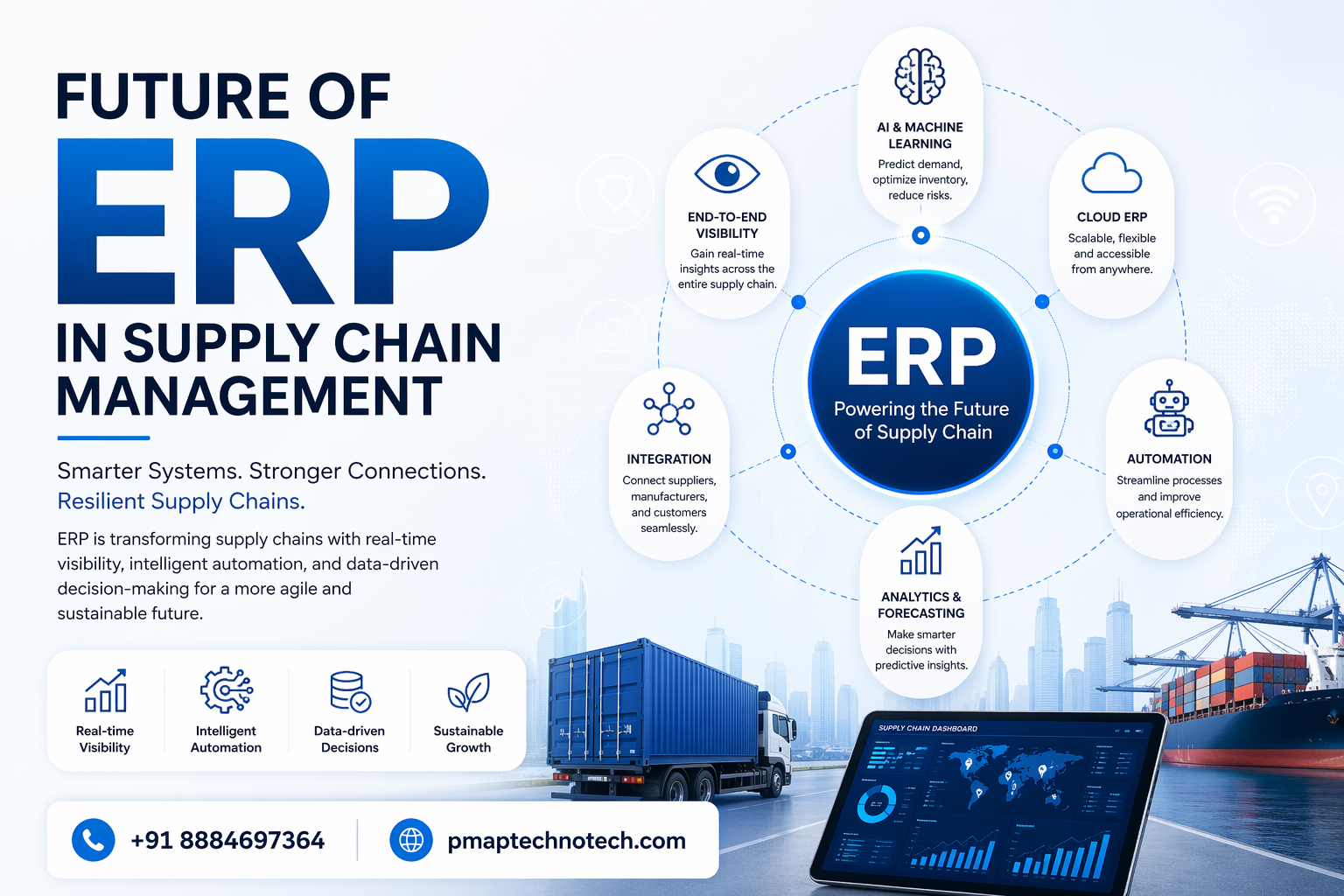
New technologies and ideas are changing the future of ERP and the supply chain. Here are some of the most important trends:
AI-powered ERP systems can look at a lot of data and give firms predicted insights that help them make better choices.
Automation is improving efficiency in warehousing, production, and logistics.
Cloud ERP solutions are perfect for modern businesses because they are more flexible, scalable, and easy to access.
You can track and monitor equipment and goods in real time with IoT devices, which makes them easier to see and control.
These improvements will make ERP systems even better at managing their capabilities and supply chains.
ERP is a great way to manage the supply chain. ERP is an important part of making things today. It helps with increasing visibility, lowering costs, and boosting productivity.
ERP helps companies make the best use of their resources and run their businesses more smoothly. It also helps them stay ahead of the competition in a market that is always changing.
Manufacturers who want to improve their business and have long-term success should invest in an ERP system. It helps businesses deal with problems they're having right now and get ready for growth and new ideas in the future.
Supply chain management in ERP refers to the integration of all supply chain processes—such as procurement, production, inventory, and logistics—into a centralized ERP system. It helps businesses manage operations efficiently using real time data and automation.
ERP improves supply chain management efficiency by automating manual tasks, providing real-time visibility, and ensuring better coordination between departments. This leads to faster decision-making, reduced errors, and optimized workflows.
Some major benefits of ERP in supply chain include:
ERP systems provide advanced inventory management features such as real-time stock tracking, automated replenishment, and warehouse management. This helps businesses avoid overstocking and stockouts.
Real time data allows businesses to monitor supply chain activities instantly, identify issues quickly, and make informed decisions. It helps in reducing delays, improving accuracy, and enhancing overall efficiency.
ERP systems track the availability and usage of raw materials, ensuring proper planning and procurement. This helps reduce waste, prevent shortages, and maintain smooth production processes.
Without ERP, manufacturers may face:
ERP solutions for manufacturers are specialized systems designed to handle production planning, procurement, inventory, and supply chain operations. They can be customized based on business needs and industry requirements.
ERP reduces overhead and operational costs by automating processes, minimizing errors, optimizing resource usage, and improving overall efficiency.
Yes, modern ERP systems are scalable and suitable for businesses of all sizes. Small and medium manufacturers can benefit from improved efficiency, better control, and enhanced decision-making.