

The manufacturing industry is rapidly evolving with the adoption of digital technologies and automation. Businesses are continuously looking for ways to improve productivity, reduce operational costs, and streamline processes. One of the most effective solutions helping manufacturers achieve these goals is production ERP software.
Modern manufacturers are shifting from traditional systems to ERP software for manufacturing industry to manage operations more efficiently. ERP systems integrate various business processes such as production planning, inventory management, finance, procurement, and supply chain management in ERP into a single platform.
In this article, we will explore how production ERP software for manufacturing industry helps businesses improve operational efficiency, optimize production processes, and enhance overall business performance.
Production ERP software is an enterprise system designed specifically to manage manufacturing operations. It integrates different business functions such as production planning, inventory tracking, procurement, quality control, and financial management into a centralized system.
With ERP for manufacturing industry, companies can monitor production processes in real time, improve planning, and make data-driven decisions.
The main objectives of production ERP software include:
By implementing ERP software for manufacturing industry, companies gain complete visibility into their production operations.
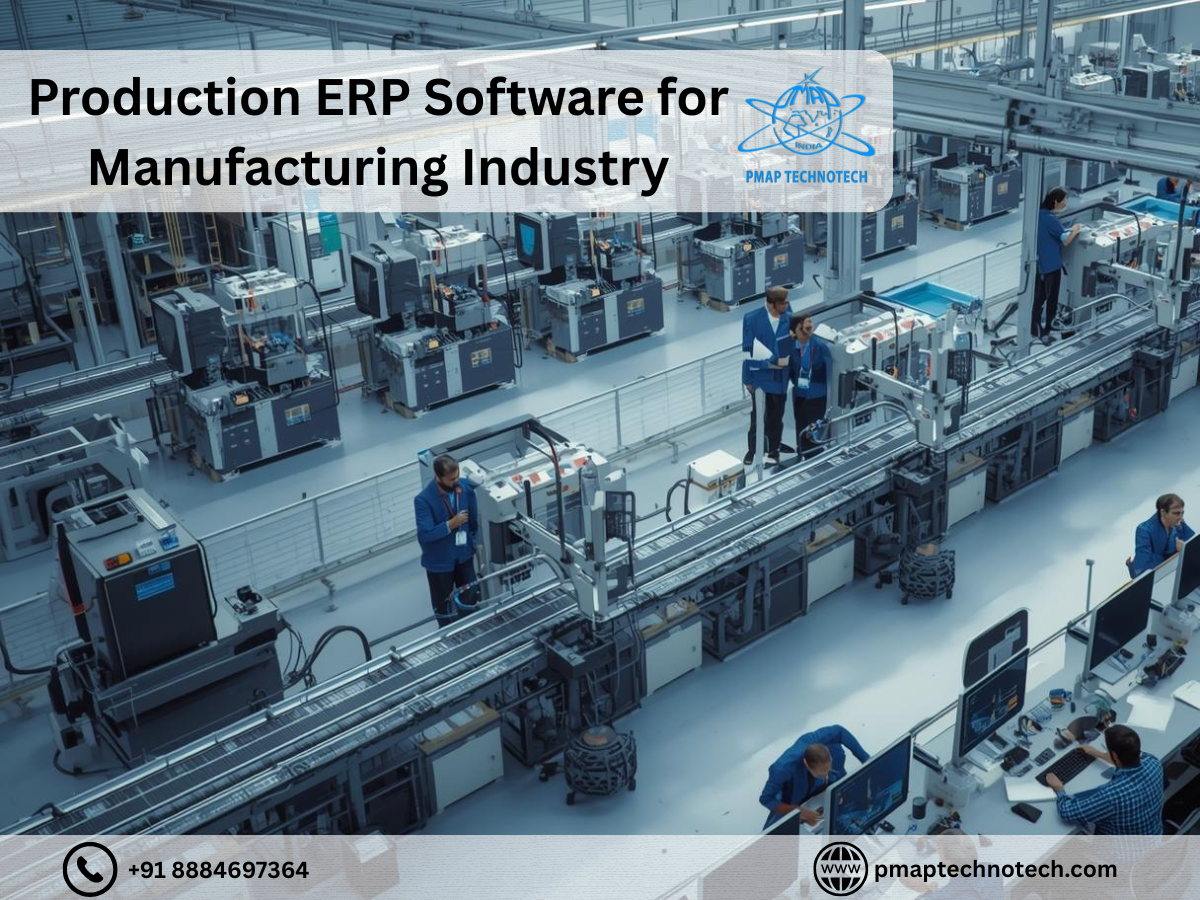
Manufacturing businesses deal with complex operations that involve multiple departments such as procurement, production, inventory, logistics, and finance. Managing these processes manually can lead to delays, errors, and increased operational costs.
This is where ERP for manufacturing industry becomes essential.
ERP systems store all business data in one centralized platform. This enables different departments to access accurate information and collaborate more effectively.
Production planning is one of the most critical processes in manufacturing. Production ERP software helps companies forecast demand, schedule production activities, and allocate resources efficiently.
A well-managed supply chain ensures that raw materials are available when needed and finished products are delivered on time. Supply chain management in ERP helps streamline procurement, logistics, and distribution.
ERP systems provide real-time dashboards and reports that allow management to track production performance and make quick decisions.
A good production ERP software solution includes several features that help manufacturing companies operate more efficiently.
This module helps manufacturers create production schedules based on demand forecasts, resource availability, and inventory levels.
Inventory management is crucial in the manufacturing industry. ERP systems help track raw materials, work-in-progress items, and finished goods to avoid stock shortages or overstocking.
Quality control ensures that products meet industry standards. Many ERP systems include quality management tools that monitor product quality throughout the production process.
Supply chain management software integrated within ERP systems helps companies manage supplier relationships, procurement activities, and logistics operations.
ERP systems also include financial modules that track expenses, revenue, and profitability. This allows businesses to maintain accurate financial records and monitor overall performance.
Supply chain operations play a major role in the success of manufacturing businesses. From sourcing raw materials to delivering finished goods, every step must be managed efficiently.
Supply chain management in ERP helps companies optimize the entire supply chain process by integrating procurement, inventory, production, and distribution.
Key benefits include:
With supply chain management software, manufacturers can ensure smoother operations and better customer satisfaction.
Manufacturing companies often manage multiple production projects simultaneously. Effective project planning in software project management helps businesses track project timelines, manage resources, and monitor progress.
ERP systems include project management tools that allow businesses to:
These features help ensure that projects are completed on time and within budget.
Selecting the best ERP software for manufacturing depends on the specific needs of the business. Every manufacturing company has unique workflows and operational requirements.
When choosing an ERP system, businesses should consider the following factors:
A reliable ERP software development company can help businesses implement and customize ERP solutions based on their operational needs.
Implementing production ERP software provides several advantages for manufacturing companies.
Automation reduces manual work and allows employees to focus on more strategic tasks.
ERP systems help eliminate inefficiencies, reduce waste, and optimize resource usage.
Real-time analytics and reports help management make informed business decisions.
Efficient production and timely delivery improve customer experience and build trust.
ERP systems support business growth by providing scalable solutions that adapt to changing business needs.
While ERP systems provide numerous benefits, their implementation can sometimes be challenging.
Common challenges include:
However, with proper planning and support from experienced ERP software developers, these challenges can be effectively managed.
The future of ERP in manufacturing is closely connected with emerging technologies such as Artificial Intelligence, Machine Learning, and the Internet of Things.
Modern ERP systems are becoming smarter and more advanced by integrating predictive analytics, automation, and real-time monitoring.
In the coming years, ERP software for manufacturing industry will continue to evolve and help businesses become more efficient, competitive, and data-driven.
In today’s competitive market, manufacturing companies must adopt modern technology to stay ahead. Production ERP software for manufacturing industry provides a powerful solution for managing production planning, inventory, finance, and supply chain operations from a single platform.
By implementing the right ERP for manufacturing industry, businesses can streamline operations, reduce costs, improve productivity, and achieve sustainable growth.
Companies that invest in the best ERP software will be better equipped to handle industry challenges and meet growing market demands.
Answer: Production ERP software is an integrated system that helps manufacturing companies manage production planning, inventory, procurement, and other operational processes.
Answer: ERP software helps streamline operations, improve production planning, and enhance supply chain management.
Answer: Supply chain management in ERP refers to the integration of procurement, inventory, logistics, and distribution processes within an ERP system.
Answer: ERP systems automate workflows, provide real-time data, and optimize production planning, which improves overall efficiency.
Answer: Yes, many ERP solutions are designed specifically for small and medium-sized manufacturing businesses.
Answer: The implementation time depends on the size of the company and the complexity of the ERP system.
Answer: Businesses should consider scalability, customization options, integration capabilities, and vendor support.
Answer: The main benefits include improved productivity, reduced operational costs, better decision making, and enhanced supply chain management.